Posts Tagged ‘education’

“You’ve divided the teachers”

Posted in Free Speech, Law, Life, New Zealand on December 24th, 2012 by Matt Taylor – 1 Comment

Teacher in classroom

December 5 was my last day of school. Ever. I’m not sure how to describe the feeling of satisfaction I got from being able to leave a place with my head held high, integrity in check, and on my own terms; not having been suspended, or baited into leaving by people who would rather no one challenged things as they are. It feels good to have shaken things up a bit, to get people to question things, and to hopefully cause change in some small way. Just before I had left, someone said that I had divided the teachers over the photography incident. And that’s okay with me.

I thought there was a couple of interesting things I’d share, now that threats of suspension are off the table.

First, there’s a detail that I’ve missed from all the posts about my old high school… my dad works there. This obviously created very interesting situations, like a blog post being printed out and shown to him by a deputy principal, as if he should convince me to take it down because it was inconvenient for the school. I have a huge amount of respect for him for standing beside me, with the view that I was old enough to make my own decisions, even if he didn’t understand, or agree with them (and that a school really has no jurisdiction over outside of school speech). What annoys, angers, and frightens me is that I know there are parents out there, who in the same situations would immediately side with the school.

On the Monday morning after the photography incident, I was given a green piece of paper by my deputy principal, a blank incident report to complete, typeset in Comic Sans as if to emphasise its ludicrousness. I didn’t fill it in, because it was apparent I was going to be cross-examined over whatever I wrote down, while the teacher’s incident report would be treated as the truth… the holiest of untouchable, unquestionable statements. I kept the form though.

On November 1, after my photography panel was finished, I submitted my own incident report after it appeared to me like a teacher was trying to bait me into reacting to them, yelling at them, or more.

I gave it to my deputy principal who gave it to the principal, and I never heard about it again. Clearly incident reports are a one way street.

On Wednesday P6 I had design. The computer suite is my classroom. S slammed the door that leads to the computer suite from the office. She spoke loudly on the cordless phone in front of her class about me. I could hear from the other room. She said, among other things, that she thought I wasn’t allowed over there, meaning the art department, until I said sorry to her. This would be unheard of in other departments, e.g. if a physics teacher had a problem with me she would not be allowed to hijack my education in chemistry. Today, Thursday P2 I had design again. S slammed the door that leads to the computer suite from the office again.

Sending disparaging emails to other staff about me, and putting lies in quotation marks to make them appear like the truth is also completely inappropriate, unacceptable, and hurtful.

Here is what actually happened on the quad. “Can I please talk to you?” “Ah, not at the moment Matthew.” “Did you say that you didn’t want me in your class?” “Ah, I didn’t make that decision, you need to go and… this is from [the HOD]. I’ve had to provide a statement about what happened.” “I just-” “Matthew.” “I just want to hear you say that you know that panel is due tomorrow and you’re not doing anything about it. Do you want me to pass?” She says nothing, enters the office, and I follow to go to the board room. I say “that’s all I needed to hear.”

Submitting a scathing personal attack and character assassination about me, that is full of lies, disguised as an incident report is hurtful.

Blackmailing me for an apology in exchange for her help is also inappropriate.

These events are not acceptable and are upsetting. Where is my apology?

I learnt two big lessons after all of this. You will never know all of the things going on behind the scenes, and that you will find support in unexpected places.

The other thing that seemed best left unspoken about until after I left was that I learnt that four builders were kicked off a building site at school last year because of their police checks. I think it’s pertinent to disclaim, based on what I said above, that I didn’t learn this through my dad. One of the offences was unlawful sexual connection with a young person aged under 16, and my principal wasn’t happy that I knew. From what she said, it sounds like they were working during school hours: “people… who are working on our building site during school hours, even though they’re not working directly with young people… have to be police checked”.

She said that that sort of information is highly confidential, and was an invasion of privacy of those workers, that I knew they were kicked off and why. I didn’t (and still don’t) know the names of who was kicked off the building site, just that obviously processes in place failed, e.g. waiting for police checks to come back before people are allowed to work at a school. I think it’s interesting that in a school with reasonably young students attending, the parents weren’t informed. I would even argue that it would be in the interests of the parents and students, especially considering the under 16 part of the offence, that a lack of oversight like this was disclosed to them.

I wonder if the Ministry has to be informed of situations like these. If anyone finds Hekia, could you please ask her for me?

Before prize giving, I told someone at work that I was ready to leave school. She asked if I thought I had questioned the right things.

Are there right things to question, or should we always doubt those who say that they have found the truth?

Image credit: Bart Everson

Judge Not Lest Ye Be Judged

Posted in Life, Mental Health, New Zealand on October 31st, 2012 by Matt Taylor – 1 Comment

This post relates to the small problem that turned into a big problem last Friday.

Keys

“Can I please talk to you?”

“Ah not at the moment Matthew.”

“Did you say that you didn’t want me in your class?”

“Ah, I didn’t make that decision, you need to go and… this is from [the head of department]. I’ve had to provide a statement about what happened.”

“I just-”

“Matthew.”

“I just want to hear you say that you know the [photography] panel* is due tomorrow and you’re not doing anything about it… Do you want me to pass?”

She doesn’t say anything, and walks into the office.

“That’s all I needed to hear.”

*In NCEA Photography you work throughout the year on a panel of work (three big boards stuck together) that’s worth 14 credits. This is very important as, in simple terms, you need 14 credits to get University Entrance in a subject, and 60 credits overall to pass the year.

It is a Monday morning. There are four people in the school board room. My deputy principal, E, asks if I remember last time.

She’s referring to when she wanted to talk to me about this blog post (i.e. pressure me to take it down), but ended the interview before it started when I told her I was recording the conversation on my phone. She said I needed her permission. I told her I didn’t.

She says that she doesn’t want me to tape this conversation, but she’s happy to have it taped as long as she gets to tape it, keep the tape, and transcribe it. Today, two days later I am told that this transcription has still not occurred.

E has a statement from my photography teacher, S. I ask if I can read it. “No you can’t sorry.” Not before I give mine. I wonder if this complies with the Privacy Act.

She asks me to tell her about Friday period six.

I asked S to unlock the computer suite, and if she had the camera card reader.

S told me she didn’t know if one of her keys would unlock the filing cabinet the card reader is now kept in. She said she could check soon. She gave me her keys. The door I wanted her to unlock was three steps from where she was standing.

I unlocked the computer suite. I walked through the art office to her classroom. She seemed busy, like she wouldn’t be able to find the key right away, if it turned out she actually had it. To save everyone time* and because of multiple reasons I didn’t think getting the card reader myself would be an issue, I walked over to the filing cabinet and tried one key. It did not fit.

*Our class time with S has been cut because of budget issues. Previously I have been to S’s office to ask her to look at my work and been told that I was interrupting her only hour of non-contact time with students that day, and on another occasion that she needed to send a really important email.

S walked into the office and overreacted. She was angry I was trying to get the card reader. I made a comment that she should stop being bipolar. This was a poor choice of words. I meant that she gave me her keys and then switched to being angry about me using them just like that. At this point she had a door behind her–an exit.

We argued for a few minutes.

She showed me a sign on a door to the office that said ‘staff only’. I said that this is never enforced and everyone goes into the office, alone or otherwise, to walk through, or to get things. As there were other students in the computer suite, I pushed the door closed. At this point she had the door to the other art room behind her–an exit. Doors in schools are designed so that people can always exit rooms, and even if I wanted to (I didn’t and wouldn’t) I could not physically block the three doors several metres apart from each other in the office, at the same time. At no point did S attempt to leave the room.

I said that I was fed up with stupid policies and asked why the card reader was locked away anyway. I asked about a new policy which based on a single incident that only art students are allowed in the computer suite (previously others have been allowed e.g. a friend I have a study period with, with no issues).

It was apparent I was not going to get the card reader.

“At the moment she doesn’t want to be alone with you,” E says.

I have known this teacher for five years. I have never been violent towards anyone. S knows this. Context, context, context.

I ask, “is that her?” referring to that morning when she told me it wasn’t her decision that I wasn’t allowed in her class.

“She doesn’t feel safe.”

This hurts.

“Can I read what S said?”

“No… well I can read it out to you.”

“Matthew Taylor asked for my keys to unlock the mac suite at the start of P6, while I was sorting out my Y9 class, he also asked if I had a key to unlock the file cabinet in the Art staff room, as he needed the card reader, to which I replied I’m not sure, if I do I will have a look shortly.

When I walked into the Art office to get the equipment for my class, Matthew was attempting to unlock the staff file cabinet, without permission and with no staff member present.

He spun around when he was caught, I was shocked–”

I laugh. The hyperbole is dripping off the page already.

“–and said what do you think you are doing, he walked up to me and handed me my keys, I asked quite firmly what he thought he was doing [she actually said that what I was doing was highly inappropriate], he replied “can you stop” I said “I beg your pardon” as he was right up in my space [the room we were in was about 3 metres by 2 metres, even if I tried my best, I'm sure I would still have been “up in her space”], he replied “can you stop” I said ” I beg your pardon” as he was right up in my space, he replied “can you stop with the Bi Polar” again I said I beg your pardon! what do you think you are doing in here, this is a staff only area and you are trying to unlock the staff filing cabinet without permission.”

“She’s got a very good memory if she can remember word for word what she said.”

“I gave you my keys to unlock the Mac Suite. Matthew said ‘it was implied that he could go into the staff file cabinet, to which I said NO it was not. Matthew closed the door to the Mac suite, I felt very uncomfortable–”

“So you locked her with you?”

“I didn’t lock her in there. I closed the door because it’s inappropriate to talk like that in front of other students.”

“I felt very uncomfortable as he was in my space once again being very aggressive, using a very firm and aggressive snappy [snappy is her go to word to describe me when we don't agree on something, see the Facebook incident incident report, which she also wrote] tone. I opened the door and showed him where it has printed very clearly STAFF ONLY. He replied people come in here all the time, I replied no they don’t, people only go in here when staff are around, not un attended. He was being very rude and argumentative.

I told Matthew if he had a problem he needed to talk to [head of department], he kept asking for the card reader, I told him he needed to talk to [head of department] before that would happen, he said WHY, I replied because of what you just did.

He said why, and began shaking and was red in anger [I didn't realize this, but I blame adrenaline], and very firm in his tone with me, completely unacceptable, and he closed the door again”

“I suppose we have a problem in that you essentially… it was interpreted as being quite aggressive in there…”

“Well I’ve never been aggressive to staff before and we’ve known each other for five years so I think that’s an… overreaction and it’s a little bit of hyperbole.”

”He then said he was sick of this school and the stupid rules, “who said who has said other students cant come into the Mac suite”, I said he needed to talk to the HOD if he had a problem, he said “who said we cannot come into this office”, and “why do you lock away the card reader anyway”, I replied you need to talk to the HOD, as I am finding your tone very disrespectful, I don’t make all the rules, however I do follow them, you need to speak to the HOD if you have a problem. I opened the door and said you need to go in there. I was very uncomfortable, like he was trying to intimidate me, he asked rudely about the card reader, I told him he needed to wait and have a discussion with [head of department] about it, because of his actions and closed the door. I was very shaken; he was so very aggressive in his manner and really out of line.

Once I got my class sorted, I seen [head of department] and told her, she asked me to write it up and we agreed today was not the best time to confront him and we would leave it till Monday, due to the way we felt he would react and talk to [head of department].”

We’re about to leave. E has gone away and come back.

“Did you hassle S this morning?”

She’s holding another incident report.

From: [Photography teacher]
Sent: Monday, 29 October 2012 11:07 a.m.
To: [My deputy principal]
CC: [Principal]
Subject: Matthew Taylor

I have another incident form which i will give to you [my deputy principal] re Mattherw Taylor this morning at 9.45am, where he cut me off in the quad and confronted me and said “i want to here from you that you said i cannot do Art in the Art room”, to which i replied i did not say that, he kept going, its all written up, , so i turned and went to and knocked on [other deputy principal (we have lots)]‘s door to escape from him as i was not going to enter into a debate with him due to not feeling like i can trust him. He said”do you want me to fail”, which really hurt as i pride myself on the way i do my job and the results we get in our dept.
Cheers
[Photography teacher]


Incident report
Incident: Matthew Taylor Part 2
Date: 29/10
Statement: On the way to my classroom at 9.45 am, I seen Matthew Taylor.

He cut in front of me in the quad I said hi Matt

Matthew said I need to talk to you I replied sorry I carn’t do that at the moment

He said no I need to talk to you. Did you say I carn’t do Art to which I replied, No I did not say that, he then said “I want to here you say I cannot do it”, I said I never said that you will need to talk to [head of department] or [my deputy principal]. You realise the pannels are due tomorrow and you want me to fail, I was walking away from him at this stage & knocked on [other deputy principal]‘s door & walked in Matthew kept walking to the confrence room where he should have been

Once again his manner was not acceptable & saying I want him to fail is upsetting as I pride myself on the work I do & results we get in our dept.

See the top of this post for what was actually said. This email and incident report are examples of S putting things in quote marks and presenting them as the absolute truth, when, in reality, that is not what was said. This applies equally to the other incident report.

The plan is to come back in an hour and work, supervised, with S.

But I don’t feel up to it and don’t return to school. The new plan is to go after school and complete my panel, without help from S. Working outside of school hours has never been an issue for anyone in the past.

But, now it is:

[Head of department], [my deputy principal], [my geography teacher/a deputy principal] met
unhappy re him being in Art Suite unsupervised

The art teachers felt that this was not appropriate

That S feels unsafe around me (even though I am smaller than her) was mentioned at least six more times in the meeting.

”We’ve got a teacher who at the moment doesn’t feel safe with you.”

“Yeah but she’s not feeling safe.”

“But how do we solve the problem that she feels really unsafe?”

“…and she’s feeling safe enough to help him.”

“But she doesn’t feel safe.”

“Irregardless of being a professional is still the fact that at the moment she is still pretty angry and she feels uncomfortable.”


It was upsetting.

That afternoon I see the psychologist I had stopped seeing.

I work at home that night, and am allowed to go into school at 7:30am on Tuesday to print one last photo. The plan was to print with ink over some photos (referred to below as “do more to his panels”), but I decided against it.

Later in the morning [photography teacher] came and saw me saying Matthew needs to do more to his panels as she felt that they were not up to a suitable standard. I contacted Matthew to come in which he did and I said that he needed to acknowledge that his behaviour on Friday was out of line and inappropriate and he needed to say this to the teacher – [photography teacher] before she could help him to do further work on his panels. He thought about it but said that he could not do so and he went home.

In design, last period today, I hear the computer suite door slam. I didn’t need to see to know who slammed it.

I hear S say on the phone: “I thought he wasn’t allowed over here until he apologised.”

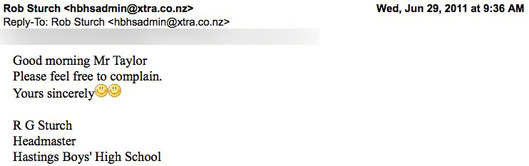
Being assertive and sticking up for yourself is not inappropriate. Writing a scathing personal attack on my character disguised as an incident report, however, is. Where is your apology to me?

Judge not lest ye be judged. For in the way you judge, you will be judged; and by your standard of measure, it will be measured to you.

Image credit: Linus Bohman

Small Problems Left Unchecked Turn Into Big Problems

Posted in Life on October 26th, 2012 by Matt Taylor – 1 Comment

Macbook Air camera card reader

“Hey… why are you out here?”

“Small electronics.”

“…?”

“Three camera card readers have gone missing. The immediate conclusion is someone must be stealing them, right, and the one camera card reader that’s left gets locked away–”

“Aren’t they like $20?”

$16.30.”

“And it gets locked away?”

“In a padlocked filing cabinet drawer. I needed to use the camera card reader so when I asked to borrow her keys for the computer room I asked if I could have it. She’s all ‘I’m not sure if I have a key for that drawer–’”

“So… even she isn’t necessarily trusted with the camera card reader?”

“Apparently not. I open the room and go through the closet office to her give her her keys back.”

“The closet office?”

“It’s a small room that joins all the art rooms together. It says ‘staff only’ on the door but no one takes any notice of the sign. Anyway, I get to her door and she seems busy with her class, so I figure I’ll see if one of her keys opens the drawer because it’s going to take her a while to get her class started–”

“And when she does come she might try all of her keys and find out you need to get someone else to open it anyway?”

“Right. So I’ve tried one key when she comes in and throws a huge fit that I’m trying to open the drawer.”

“How huge?”

“She used the words ‘highly inappropriate’. We had a go at each other for two minutes. It’s like she forgot that she’s known me for five years, and you know, I’m probably just trying to get the camera card reader, as opposed to stealing all the other stuff of huge value they must also lock up in that drawer along with the $16.30 card reader.”

“Yeah… they all demand respect for themselves and the ridiculous policies they enforce but don’t know how to treat others properly… did you get the card reader in the end?”

“No, I came outside because I can’t deal with that bullshit… actually, can you go in and get my stuff? I didn’t grab it on the way out.”


While I was waiting the fire alarm went off.

“Please evacuate the building using your nearest fire exit.”

Image credit: Robert S. Donovan

A Safe Place

Posted in Law, Life, New Zealand on September 14th, 2012 by Matt Taylor – 2 Comments

Alcohol

It’s pretty sad when your principal thinks that getting drunk in a park is safer (and looks better for the school) than having a controlled, supervised after party, where alcohol isn’t provided.

It’s pretty sad when your principal thinks the appropriate venue for discussion of said decision is behind closed doors where she can bully you into submission.

And it’s pretty sad when a community organization that’s meant to be all about young people won’t support said young people when they try to do something the right way.

But at least if something goes wrong the school had done something! The community organization played no part in it! Their names won’t be spread through the newspapers!

Or will they?

Just some food for thought, Halswell Scouts and Dear Principal.

===

I tried. And it feels good.

Image credit: Christian Senger

TEDxEQChCh 2012

Posted in New Zealand on September 1st, 2012 by Matt Taylor – Be the first to comment


TEDxEQChCh 2012 volunteers


TEDxEQChCh was streaming live all day here.

Exploration

Rakihia Tau – Mihi

Highly Flammable – Performers

Highly Flammable

Roger Sutton – Opening remarks

Tom Hooper - CEO, Canterbury Development Corporation

The Kiwi mantra of ‘give it a go’ is far more valuable than we give it credit. Christchurch might not be attractive to the risk-adverse at the moment, but that’s alright. The job right now is to attract and retain young people, and make sure that talented young people are going to want to come here.

Vibeke Linde-Strandby – Architect

“Thinking like a designer can transform the way you develop products, services, processes and even strategy.” – Tim Brown

Arlanda Stad is a business park concept with a soul.

“This is the first time I’ve tried to explain architectural concepts without slides.”

 John Hunter – Recorded TED talk

Watch the talk here.

John Hunter puts all the problems of the world on a 4′x5′ plywood board — and lets his 4th-graders solve them. At TED2011, he explains how his World Peace Game engages schoolkids, and why the complex lessons it teaches — spontaneous, and always surprising — go further than classroom lectures can.

John was put in charge of a gifted education programme. His first question was “What do I do?” the response was “What do you want to do?”.

The answer was the World Peace Game that features the UN, arms dealers, saboteurs and weather goddesses.

John admits to his students “I don’t know the answers.”

The documentary film John talks about is showing at the Hollywood Cinema in Christchurch, details will be up on the TEDxEQChCh website.

Jamie Fitzgerald – Adventurer, presenter on First Crossings

“For 42 hours we did not move anywhere.”

“So we haven’t moved anywhere and we’re winning the race.”

Sometimes when you think you’re making the least progress you’re actually making the most.

“If you don’t know where you’re going, any road will take you there.” - Cheshire Cat, Alice in Wonderland

Experiential learning.

They asked what are the insights from other people’s success that we can apply tomorrow?

Celebrating milestones

We only ever focussed on that next milestone and we celebrated it.

“Why do I push my boundaries? If I let an opportunity pass I might be letting myself down.”

Ryan Reynolds - Chief Evangelist, Life In Vacant Spaces

We live in a culture of permits.

Anything a bit out of the ordinary is forbidden unless we get special permission.

We internalize this and close ourselves off.

There is a brief time in adolescence where we act as if anything is allowed unless strictly specified as forbidden.

Approach any rule asking what does it allow?

The Book Exchange Fridge Gapfiller project: people asked “Who’s going to be locking the fridge every night?”

A permanent solution might have been too daunting.

If people will not try things without permission, you have to make it easy to get a permit, Life in Vacant Spaces deals with barriers.

It’s easy to try something when it’s temporary.

What if you could try out an idea for free for 30 days?

Festival of Transitional Architecture.

“We’re totally unresourced and in over our heads, but everyone should get in over their heads right now.”

The caption of one of the projects featured in Ryan’s slides: “Needs funding – let’s talk :)

The opposite of a permit is an invitation.

We want to foster a creative culture of creators and doers.

Inspiration

Kiel Johnson – Artist

A good idea only comes when working on a bad idea.

Lots of slides with awesome projects Kiel has worked on.

Made a printing press: “I am the press, I have the power.”

Made a survival vest for an emergency “I’m living in Los Angeles so when we fall into the ocean…”

“Get started on whatever you do… and good things will happen.”

“I do outreach… which is basically making more people like me.”

Two words: robot party.

Jane Henley – CEO, World Building Council

Green in a generation.

What we’ve created now is a set of disconnects and it’s difficult to realize visions in this environment.

“I wonder how long their drive to work is everyday.” Jane on a photo of a suburban cul-de-sac.

Market uptake is increasing in speed with each new technology.

We use labels to understand the plethora of information available to us. Performance ratings – energy, water, fuel efficiency ratings on appliances and vehicles.

Growing vegetables, community involvement, walking, closeness to family – valuable things from the past that need to be brought back.

Consumption to co-sumption

Good ideas: walking school bus, AirBNB – renting a room in your house out, carpooling (10 weddings have happened because of connections made through carpooling.com).

Community collaboration
Say a neighbourhood wants green energy – these community collaborators think up a solution.

We can look at Skype and the NZ Insulation Programme and see values becoming easier to achieve and becoming more important – connecting with friends overseas, having a warm home…

“When I was at school working together was called cheating.”

Twitter @worldgbc.

Donald Sadoway – Recorded TED talk

Watch the talk here.

What’s the key to using alternative energy, like solar and wind? Storage — so we can have power on tap even when the sun’s not out and the wind’s not blowing. In this accessible, inspiring talk, Donald Sadoway takes to the blackboard to show us the future of large-scale batteries that store renewable energy. As he says: “We need to think about the problem differently. We need to think big. We need to think cheap.”

Making a liquid battery to solve the strain on power sources.

“If you want to make something dirt cheap, make it out of dirt.”

“One of the greatest benefits of being a professor? Coloured chalk.”

“David’s young, smart, and wants a PhD.”

Abbas Nazari – Student, Former Afghan Refugee

Don’t think I could do his talk justice. Watch the video when it’s posted.

Wil McLellan – Founder, EPIC

Disruptive collaboration, the journey of getting EPIC built.

“Not feeling super positive.” – Wil on the day after the earthquake.

“We we got no money, we got no land, we got no property development experience.” But that didn’t hold them back.

“You’re pretty good at art… cough Lord Of The Rings” Wil to one of the most creative businesses in New Zealand, WETA.

Challenge convention, think outside the box.

Activation

Jed, Hera with Happiness Stan – Music

Jade Temepara – Founder, Hand Over A Hundy

Think about food differently.

Food has changed through generations ending up with things with no nutritional value.

A few days after the February quake there was no food in a supermarket near Jade and there wasn’t going to be for a week. “What am I going to do to make sure I have enough to sustain my own family” if food wasn’t available anywhere for a period of time?

Start a food revolution.

Hand Over A Hundy gifts $100 to families to start a vegetable garden.

Handing down skills and knowledge through generations – most of the mentors assigned to families are older people.

Do you have your own food system? Are you passing down valuable skills to your kids?
Are you teaching your children where real food comes from?

Pam Warhurst – Recorded TED talk

Watch the talk here.

What should a community do with its unused land? Plant food, of course. With energy and humor, Pam Warhurst tells at the TEDSalon the story of how she and a growing team of volunteers came together to turn plots of unused land into communal vegetable gardens, and to change the narrative of food in their community.

Propaganda gardening.

“We did not write a report, we did not ask for permission.”

Food is a common language.

“And we’ve done it all without a flipping strategy document.”

“I’ve seen the power of small actions and it’s awesome.”

“And for some reason I can’t comprehend it’s surrounded by prickly plants.”

“And there’s some people who don’t know what a vegetable looks like if it’s not in plastic with a label.”

“If you eat, you’re in.”

Ernesto Sirolli – Founder, Sirolli Institute

“We paid them to come… and sometimes they showed up.”

“Instead of asking ‘why aren’t you growing anything?’ we just said ‘thank God we’re here’.”

“If people don’t want to be helped, leave them alone.” It’s about respect.

“Let me tell you a secret. There is a problem with community meetings. Entrepreneurs don’t come.”

“How do you do that?” “I do something very, very difficult. I shut up.”

Entrepreneurs want confidentiality, dedication and for you to realize that a successful business needs:

A fantastic product, marketing and financial management.

None of the successful companies started with one. Study Richard Branson’s book – the first two pages. He doesn’t mention I. He says We 32 times.

George Parker – Actor

George talked about a performance he was involved in about the Canterbury earthquakes.

“We were used to working in unconventional spaces.”

Joshua Iosefo – Poet

An amazing live performance on invisible borders and being brown.

Aspiration

Ian Taylor – Managing Director, Animation Research Ltd

Ian wowed everyone with his animations.

“While everything was turning to crap here, people of that calibre were thinking about you.” Ian on getting help from big companies for his earthquake auction.

“Don’t see why not” attitude gets his staff around the world.

“Something special happened in Christchurch, grasp it.”

Sam Johnson – Founder, Student Volunteer Army

When we’re young we’re taught to value money, time, skills. Contribution is more important.

“Do you have any skills?” – A business to Sam after he asked how he could help after the earthquake.

“Why humans exist is to interact with each other.”

“In real life, strategy is actually very straightforward. Pick a general direction and implement like hell.”*

The Concert

The only way to get there is by doing four hours of volunteer work.

Bryan Stevenson – Recorded TED Talk

Watch the talk here.

In an engaging and personal talk — with cameo appearances from his grandmother and Rosa Parks — human rights lawyer Bryan Stevenson shares some hard truths about America’s justice system, starting with a massive imbalance along racial lines: a third of the country’s black male population has been incarcerated at some point in their lives. These issues, which are wrapped up in America’s unexamined history, are rarely talked about with this level of candor, insight and persuasiveness.

“There is power in identity.”

1/3 young black men in USA are in jail, prison, on probation or parole.

34% of black male population in Alabama have lost the right to vote permanently.

Rich and guilty are treated better than poor and innocent.

The death penalty question is really: “do we deserve to kill?”

1/9 on death row are innocent. In aviation we would never let an airline fly if one plane out of nine went down.

11 times more likely to get the death penalty if the victim is white opposed to black.

22 times more likely to get the death penalty if the defendant is black opposed to white.

Germany would never institute the death penalty – it would be impossible with their history to endorse the systematic killing of its citizens. But in the USA it’s fine to kill more black people than white on death row.

“That’s going to make you tired, tired, tired… that’s why you gotta be brave, brave, brave.” To Bryan on his justice initiatives.

The opposite of poverty is justice.

Keep your eyes on the prize, hold on.

Alexandros Washburn – Urban Designer

“When you meet one kiwi, you meet 100.”

On seeing one of the towers on fire on 9/11: “And we were interested in this from a technical standpoint as architects because no one had died in a high-rise building that had sprinklers.” He thought that the plane close by was some sort of firefighting plane. It wasn’t.

9/11 was the first day of school for a lot of students (something I’d never heard before).

So many similarities to Christchurch: cellphones and most landlines weren’t working immediately afterwards, portable toilets, military stationed around the city, a no go zone, a mayoral election.

Improve the quality of public life by improving the quality of public space.

Urban planning

The smallest units matter.

If it’s worth remembering, it’s worth drawing.

How do you judge an effective public space? By the perspective of a pedestrian.

Alexandros drew an awesome diagram of a street with dimensions.

When you’re walking down the street, something should catch your attention every 10m.

Sewer catch basins can’t be moved when placed – it’s too expensive.

The fire department want specific things in specific places.

The Highline

“We had to think clearly, when there was high emotion.” After 9/11.

You have to hope for something greater tomorrow and you have to accept the fear that generates.

My hope for Christchurch video

Created by Becca MacGeorge.

Time’s up.

Fin.

Great day. Watch the talks when they get posted on the interwebs.

My Hell Incident(s)

Posted in Life, New Zealand, Worldwide on August 30th, 2012 by Matt Taylor – Be the first to comment

Need help? In New Zealand, you can call Lifeline on 0800 543 354 or Youthline on 0800 37 66 33

Hell Pizza

Alice says it best:

“I’ve realised my uncertainty was probably because I shared what the Hell incident has shown me is a fairly widespread dismissive attitude towards sexual crimes. It seems to me that unless an innocent virgin is raped by a stranger in a dark alleyway, sexual assault and harassment is often belittled.”

There’s a unit in year 12 PE where the seniors teach the juniors something PE related. Four years ago I was a year nine. That would make me about 13. That would also make the year 12s a lot bigger and scarier than I was.

I distinctly remember one afternoon of this coaching. The class was returning to the gym after being outside, and we were just by the door.

I felt a hand on the back of my neck. It was one of the year 12s. He said something about it being a good size for oral sex. Or something. English was his second language. I don’t remember the specifics, and that’s okay with me.

There were more than a few people around. No one else said anything. Being a “victim” of the bystander effect is confusing. It makes you second guess yourself. It makes you think you might be overreacting. It makes emotions you’re feeling even more confusing.

At the end of class I said something, to the teacher, just like you’re meant to. Unfortunately that doesn’t make it all magically go away.

I got to experience what it was like being a male on the receiving end of whatever you call what happened. I remember the teacher I told specifically saying to me she wanted to wait until the next day when one of the female deans was around. She said that she didn’t think it would be handled appropriately by a male dean. I believed her.

I don’t what the repercussions were for this person. I know it wasn’t suspension because the same teacher told me later that if I had a vagina instead of a penis this person wouldn’t be at school anymore.

I was asked whether I wanted to take part in a mediation-putting-things-right-type-thing. No thank you, I said.

There’s still work to do.

What’s even more confusing is when this isn’t the first time something like this has happened to you. In year seven someone thought it would be hilarious to jab me in the butt area with a pencil.

Is it me, you think.

But then you realize no, no, it’s not.

Image credit: wonderferret

That Time I Was Nearly Trespassed From A Mall

Posted in Law, Life, New Zealand on August 16th, 2012 by Matt Taylor – Be the first to comment

I’ve heard things said about part one of this post: someone said that I will get what’s coming for me when I’m applying for a job and a potential employer comes across the post. I disagree. I regularly consider the potential consequences regarding what I post online and it’s effect on my future. If anything, I would hope a potential employer would know that change does not happen by staying silent, and that freedom of expression creates a better society for everyone. If a potential employer doesn’t see it that way, perhaps that’s a good test as to whether we would be a good fit.

Of course, this person sharing their opinion was a teacher, wouldn’t have read the post, and perhaps feels threatened by the prospect of students having a voice that cannot be contained by the walls and threats of the school.

In any case, there’s not room for all of us to rescue animals for the SPCA.

Values (Part Dos)

I think that sticking up for your rights is important. I think that sticking up for yourself is important. I think that if you don’t stand up for your rights, you’re making it easier for them to be taken away altogether. I think that freedom from unreasonable detention is an important right.

Security personnel in malls are quite often unfriendly, unnecessarily aggressive and lack people skills. I would like to see statistics for how many tried to apply to be police officers, but for some reason failed.

Eg. At a Westfield Riccarton “talent quest” I was approached by a woman who worked for the mall and was scolded for taking (consensual) photos of people I knew solely because they were in the “backstage area”. For anyone familiar with how they set up their stage, you would know that the backstage area could also be considered “that open to the public, uncovered area in front of Kmart”. Later, possibly related, our group was approached by a security guard and told to not “cause any crap today”.

In December 2008, I was part of a separate group of four that were locked in a small room off of the car park at The Palms by security.

The “crime” for the other three people was returning to the mall to watch a movie after being told to leave for the day. The reason for being told to leave? Pushing a wheelchair that was already on an escalator up it and then down, and letting it go briefly on the way down. I was standing at the bottom of the escalator. I was never told to leave for the day, but apparently as I did indeed walk off the premises with one of the others, I had banned myself for the day too and should have known this.

After reentering the mall we were accosted by security at the ticketing counter, who now wanted to trespass us. I’m not saying reentering the mall was the best decision, but we had no intention of causing any trouble and just wanted to watch the movie we came to the mall to watch.

This is perhaps a good time to mention that we were all around 14-years-old.

One friend was physically grabbed on the arm to stop her from leaving. We were herded through to their security HQ, which today appears to be a Community Constable’s office. I resisted entering this office, but when several adults are surrounding you, it’s clear they have no problem getting physical, and your friends are already inside, there is not much choice involved in the matter.

If you are a visual person, here is a quality cellphone photo of where we were:

The Palms Security Room

I am squashed in a corner behind a door that’s being guarded by the woman to the right of the photo. There are not enough seats for the four of us. There’s a table directly in front of us, dividing the room. The older man never leaves. Occasionally others enter, like the man writing out a trespass notice on the desk. The room is tiny, the walls are directly behind me, directly to the right of me, where the paper baskets are, and where the barred window is.

We were given no opportunity to leave, and I am sure we would have been prevented from leaving if we tried to. We were being held against our wills. We were not under citizen arrest, and the police were not on their way.

For some, maybe it seems like we deserved this, or that it doesn’t seem like a big deal.

But I felt, and still feel victimized. I regret not doing more to try to leave at the time.

To begin with, all of us refused to give our personal details. Many scare tactics were used to get us to comply. They threatened to call the police (maybe they did, but were told that the police had better things to do with their time) and all the schools in Christchurch to find out our names (1) schools weren’t open this day 2) even if they were, whoever answered would not be able to place a name to a physical description 3) they wouldn’t have discussed student details anyway).

I protested that I had nothing to do with the escalator and that it wasn’t clear to me that I was banned for the day. I repeatedly requested to view the security camera footage they were reviewing (or said they were reviewing) in the adjacent room, a request which was repeatedly denied.

A man, probably the manager, or person in charge this day came in and took photos of us on his cellphone.

I was taken outside by myself twice. Once to tell me they decided not to trespass me.

Even though I could go, I didn’t want to hang around outside alone, and I didn’t want to leave my friends.

The next time I was taken outside was to try to get me to tell them the names of the others – my response was that their refusal was their business, not mine. Another tactic used to get their names was “we need to see inside your wallets to see if you have stolen anything”.

Eventually, my friends gave up. They said their names, and were coerced into signing the bottom of the trespass notice. (If anyone’s curious, they try to look up your parents up to check the name you give).

And then, they were released.

The Palms Trespass Notice

My intention is to shine a light on what happens behind closed doors, sometimes probably with people much younger than we were at the time. The malls know that young people don’t know their rights, and are unlikely to stand up to big, rough, bullying adults, but they don’t care. It’s much more important for them to nab that group of kids pushing a wheelchair on an escalator.

Stand up for what you believe in. Because it matters.

Date: Thu, 16 Aug 2012 21:05:11 +1200
Subject: Trespass Procedure
From: Matt Taylor
To: info@ampthepalms.co.nz

Dear The Palms,

Have you changed your procedure, or does this sort of thing still go on?
http://www.matthewtaylor.co.nz/2012/08/16/that-time-i-was-nearly-trespassed-from-a-mall/

Matt

That Time I Was Nearly Suspended From School

Posted in Deep Dive, Free Speech, Law, Life, New Zealand, Technology on August 10th, 2012 by Matt Taylor – 3 Comments

Values (Part 1)

I think that sticking up for your rights is important. I think that sticking up for yourself is important. I think that if you don’t stand up for your rights, you’re making it easier for them to be taken away altogether. I think freedom of expression is an important right.

In a practical sense, New Zealand schools have no one to be accountable to in regards to internal behavioral decisions. They also seem to think they have carte blanche permission to do whatever they like.

This is a problem.

The letter

Two years ago, in Year 11, a friend was required to write an apology letter to a teacher. Apology letters are meaningless tokens–coerced with the insinuation of further/alternative punishment if one doesn’t comply.

So we thought we’d have a laugh. We wanted to see what would be accepted as an apology letter, with the help of Google.

Facebook Apology Letter

This was.

Facebook

I posted the above image to Facebook, unedited, with a facetious caption:

X’s sincere apology letter to X. Putting this on my CV under achievements.

Privacy settings restricted who could see it, and those who commented on the post said nothing nasty about the teacher involved. This wasn’t about the teacher. It was about the process of discipline at our school.

Here’s where the story should end.

But it doesn’t.

The next day, the school wanted the post taken down. Many reasons were thrown at me during an hour in two different offices, without merit. That I would ruin the teacher’s career, that the letter wasn’t sincere, that the model comment was defamation… I was threatened with suspension, even though the two staff involved, a dean and a deputy principal, didn’t have the power to make that call. Note that the letter had been accepted the day before.

I argued. Free speech. That even the police don’t have the power they were asserting. I didn’t believe that this post was causing a disruption to school so severe that my freedom of expression should be restricted. Their argument was that I should spend my time on something that mattered.

The end of day bell had rung, and I wanted to go home. It felt like the only way to get out the door would be to agree to remove the post from Facebook. And so I agreed.

I removed the post from Facebook that night, which was a mistake. I regret giving in.

I asked many people for advice over the weekend. The consensus was that the school’s argument was bullshit, but if they did suspend or expel me, my education would suffer.

I regret giving in.

Don’t make my mistake. Stand up for what you believe in. Because it matters.

I’ve tried to change the schools stance on social networking and freedom of expression immediately after the incident, and again this year. I was unsuccessful both times. Change is hard.

Also, this isn’t a dig at the staff involved. I assume the response would have been similar from any of the deans or senior management staff. That doesn’t make it right though, and illustrates an institutional misunderstanding of rights/the law/technology. Hopefully this post will help at least one person to have the courage to challenge these attitudes.

In the interests of fairness, here’s a note from the incident report about this… incident, verbatim, except for comments, and for names being removed:

Matthew was unwilling to accept any responsibility at all for his part played in the apology letter written to X or for putting it up on his face book page. Matthew argued that what he had done was not a school matter and that he had not done anything wrong, and was told that if X felt like it he could actually take it to the police as it was a deficatio [defamation] of his character, Matthew said ok I would rather it be a police matter than a school issue as it has nothing to do with the school, this was said to X and myself, that’s when I got X to step in.

And deal with him. He continued to argue that he had done nothing wrong and got quite defensive and rude and told X he would take it off his page when he got home but only if he asked politely [I said that if I was asked politely in the first place, my response might have been different], which X had been very patient with him, and we tried to get him to understand the seriousness of the situation, Matthew failed to understand that what he had done was not appropriate and he stood by his comment that it was sincere letter [I didn't say the letter was/wasn't sincere, but it shouldn't have been relevant to the situation.] and argued the fact and still failed to understand why it was a school issue. X told him once you put print anything about a teacher it becomes a school issue, especially as this was supposed to be a sincere apology letter he failed to accept it was a piss take until X said what do you think your dad would think if I gave him this letter and didn’t mention you had anything to do with it, he sat for about 2min in silence and then said I guess he would think it was a joke, X then said you have just admitted that it was not sincere, it went on for about 10 min before X said look if your not going to take this seriously I will take it to X [the principal, they said I would be suspended] it was only then he said he would take it off his face book page if X asked politely [see above].

Matthew was quite rude and snappy and had little respect towards us and for the matter.

OIA Adventures: School Formals, Same-Sex Dates, And After Parties – The Meat

Posted in Law, New Zealand on February 29th, 2012 by Matt Taylor – 13 Comments

Part 1 | Part 2 | Part 3

School ball

Last year I sent an Official Information Act request to all the state and integrated secondary schools in New Zealand that have year 12/13 students with a couple of questions about their school balls/formals. Many schools didn’t reply at all, and the Office of the Ombudsman is involved with those requests. Many schools didn’t have much experience with the OIA. And there’s a few things I could have done better.

Here’s what I said:

If you hold a school ball or formal could you please answer the following questions? Do you have a policy on same-sex dates? If so, could you please email me a copy of that policy?

In the past, has the school banned same-sex dates from attending the school ball or formal? If so, could you please provide details?

Do you have a policy on parties before/after the school ball or formal? If so, could you please email me a copy of that policy? [note that if schools interpreted this as a written policy, many will have responded with no policy when they do indeed have common practices and procedures]

And here’s the meat of the replies.

Same-sex dates

Darfield High is perhaps one of the more honest schools, and might not deserve to be in the same category as the other schools listed below. They admit that in the past same-sex partners weren’t permitted at their balls. This would have happened at other schools too.

Greymouth High School elect a king and queen. This probably happens at other schools too. Is it an inclusive practice?

‘Case by case basis’ is mentioned a lot in these replies. This doesn’t apply to opposite-sex dates that want to attend to the ball. Is it fair to subject same-sex dates to an additional process, just because of their sex?

Rejecting friends and mates of the same-sex as partners also came up. Are friends and mates of the opposite sex declined as dates? Is having to be gay, or having to prove that you’re gay, by signing something, or whatever, to take a same-sex date to a ball/formal acceptable?

Inviting sports teams to the formal/ball also came up as an excuse to treat same-sex couples differently. I wonder if the members of a mixed sports team attending the formal/ball would, as one schools says, “make a mockery out of the occasion”. I wonder how many times a same-sex sports team has attended the event at these schools. If it has happened, I wonder if they are being slightly over-dramatic regarding the negative effect it caused.

Christchurch Adventist School is the only school, out of those that actually replied, that flat-out says same-sex dates wouldn’t be permitted.

Campion College says they “generally [do not permit same-sex dates] due to a previous issue with vandalism”. I wonder if effectively banning same-sex dates is the best solution for this situation. I wonder how vandalism of a significant nature can occur during a supervised event.

Here’s what St Patrick’s College Wellington (the one that was in the news last year) said:

“Do you have a policy on same-sex dates?
No we do not.

Has the school banned same-sex dates in the past?
No as this has never arisen before.

Do you have a policy on parties before/after the school ball or formal?  No we do not.”

Wellington Girls College

  • “No we don’t have a policy on same sex dates. If girls are in a same sex relationship they can bring their partner but we deal with this on a case by case basis. No we haven’t banned a same sex partner – we have said no to a friend from another school who just wants to come along to go to the ball though.”
  • “No we don’t have a policy on parties before/after ball. We simply say to parents and girls we don’t support after ball parties and if we hear of them we tell the Police. Pre ball parties  – we ask parents to be vigilant.”

Sancta Maria College

  • “We do not have a policy on same sex dates although outside ‘partners’ cannot be “mates” of the same sex” “The students understand that all we are trying to avoid is a group of boys for example arranging to bring their Rugby Club team to the Ball by having them as ‘partners’. This is not the purpose of the Ball.”
  • “We do not have a policy but the school strongly discourages pre-ball and post-ball parties where alcohol is served.”

Darfield High School

  • No policy, same-sex dates not recently banned: “I have been at the school for 2 and a half years. I have been told that some years prior to this there was some issue with same sex dates.”
  • No policy on functions

St Thomas of Canterbury College

  • “Our students seem to have a wide circle of female friends  and there has been no demand or requests from our students beyond that to date. If a student wanted to bring a same sex relationship partner we would be happy to accommodate that on a case by case basis.” No response to my request to elaborate.
  • “Our school ball is a community model ie the majority of parents and staff attend so the function is 50% student 50% adult. In terms of pre ball and post ball functions we work together with our students and discuss the pros and cons of these and inherent problems as well as safe measures if hosting in the home. As our function starts quite early at 6.30pm, involves a dinner and ball and finishes at 1am, our students have chosen in recent years not to have formally arranged after parties at booked venues.”

Christchurch Adventist School

  • As a Christian Adventist school (“Special Character – and biblical same-sex dating is not accepted as part of the faith community”). Also as we have students from Years 0-13 and hence we don’t encourage any relationships of any kind. We are a small area school so monitoring and dealing with the issues are manageable.
  • No policy on functions

Campion College

  • “The College does not have a written policy on same sex partners but generally does not permit it due to a previous issue with vandalism created when a group of students brought their ‘mates’ from another school. We reserve the right to decline any partners from outside the College attending.” Me: “So that’s more to stop troublemakers who are coming as friends, not dates?” “That’s correct.”
  • Ball finishes at 1am to try to discourage after parties

Kavanagh College

  • No policy – “I would however draw the line at say, for example, half the 1st XI soccer boys (or netball girls or whomever) want to take the other half just to make a mockery out of the occasion.”
  • “Like most schools we would prefer they did not occur. The main issue for the Board and management of the college is safety. In the past we have written/communicated to parents and students giving them firm advice and guidelines about safety and the legal ramifications of under-age drinking, or running large scale pre or post events etc.  To date we have been fortunate that any events of this type, if they have occurred, have been well organised and managed by a wide group of parents.”

St Bede’s College

  • “I wouldn’t have a problem with it. However, it would have to be a senior management decision if the issue came up. As it hasn’t to date no policy has been made.”
  • No policy on functions

Tauranga Boys’ College

  • “We do not have a specific policy on same sex dates attending but treat each case as an individual situation. Last year we had two males from the college attend the ball together. I’m unaware of their sexual preferences as it wasn’t an issue in the decision being made.” “If the situation arises we will talk it through with those involved and then make a decision.”
  • “We discourage pre-balls and after-balls and reserve the right to cancel the ball if we are are aware of a gathering being planned involving significant numbers. We appeal to our parents to use their judgement and manage the situation sensibly. I have refered to this in my latest newsletter which will be available on our website in a couple of days. We start the ball at 6.30 with a formal meal for yr 13 students only and try to make the ball itself the main event of the evening for our students.”

School attitudes towards balls/formals

  • Martin Isberg from Wainuiomata High School points out that in every letter about their formal/ball they have sent out over the past few years, “press coverage after a couple of incidents in Auckland” has been included.
  • Breath testing and bag searching came up a bit, which is concerning from a civil rights standpoint.
  • In similar Big Brother fashion, Craighead Diocesan School requests a list of all the students attending before ball events.
  • Other schools mentioned making students not want to leave the event, or making it finish late so students wouldn’t have after parties.
  • Some schools have dinners and other events instead of balls/formals.
  • Thames High School notes that parents in conjunction with a student committee and community health providers have previously organised a controlled after ball with limits on alcohol, security, food, non-alcoholic drinks and transport being provided and attendance limited. But now it’s frowned upon by the police, and I assume the students run their own, less well supervised after parties.

General replies, with policies or comments

Albany Senior High School

  • No policy on same-sex dates
  • “If our Principal hears anything about an after ball party then the ball will be cancelled”

Alfriston College

  • No policy on same-sex dates
  • “If your child does intend to attend any Pre-Ball function we ask that you ensure that no alcohol is consumed. The Police have made it quite clear that they will close down any organised After-Ball event.”
  • Attached – pdf

Aparima College

  • No policy on same-sex dates, “all applications for [outside] dates to our ball are treated equally”, application to bring date from outside school involves references from their school or employer/other non-related reputable adult
  • No involvement with functions, allows SADD (students against drunk driving) representatives to liaise with senior students to discuss safe options, responsible parents organize after ball (including buses, supervision and bouncers), local police make an appearance, never had any problems

Aranui High School

  • No policy on same-sex dates
  • “We take every step to ensure that intoxicated students are removed by security guards before entry to the venue of the formal.”

Aurora College

  • No policy on same-sex dates
  • No policy on functions – small school, no problems in past with after functions

Awatapu College

  • No written policy on same-sex dates,  “students are free to bring a partner of their choice”
  • No written policy on functions, reserves the right to reject partners based on behavioral history. “Students under the influence of drugs or alcohol will not be admitted to the ball and parents will be contacted to come and collect them.  We have tight security and supervision, which includes a search prior to entry, in addition to the filter of the principal’s reception line.” “If we hear of any large scale organised parties, we inform the police.”

Bayfield High School

  • No policy on same-sex dates
  • No policy on functions, “but we do have policies around alcohol and the school. You have not requested those.” Not encouraged, not banned, schools name cannot be used. Must arrive at formal sober. Before ball parties have never been an issue.

Cashmere High School

  • No policy on same-sex dates
  • “We ask for information about them but send a letter to all parents explaining that we are not involved in these in any way.”

Central Hawkes Bay College

  • No policy on same-sex dates
  • Urge students to be sensible, generally have good co-operation from students and wider community

Coastal Taranaki School

  • No policy on same-sex couples
  • “Parties (if involving [drugs and alcohol]) are not sanctioned by the Board”

Craighead Diocesan School

  • No policy on same-sex dates
  • Letter to students/parents ask them to let the school know if they’re planning on holding a before formal event. Asks for list of students attending. Recommends limits on alcohol. Parents and students sign form stating that there will be no after formal functions.
  • Attached – copied from email – pdf

Cullinane College

  • No policy on same-sex dates
  • “If we become aware of any mass gatherings we contact the Police”

Edgewater College

  • No policy on same-sex dates
  • “They all know that if they turn up intoxicated they will be refused entry. We employ security to assist and bags are checked prior to entry. If alcohol was found they would be sent home. Years ago students did run an organised after ball that went off without problems. The following year it fell through and didn’t happen and since that time there has never been an organised after ball in the sense of organised venue, alcohol via the entry ticket, security guards organised or parent organised.”

Epsom Girls’ Grammar School

  • No policy on same-sex dates
  • Police talk to students about legal issues around pre and after ball parties. Forward information to families from the police and council regarding these events.

Fairfield College

  • No policies
  • Attached – exported to pdf from .doc

Freyberg High School

  • No policy on same-sex dates
  • “An arranged after ball function would put the ball at risk of being cancelled”

Greymouth High School

  • No policy on same-sex dates
  • “Can breath test on entry”
  • Attached – exported to pdf from .doc

Hamilton Boys’ High School

  • No policy on same-sex dates
  • “The School follows a practice of discussing each year with senior students whether or not a school ball will be held and, if so, what arrangements or conditions will apply, including such topics as who will be invited and any associated events”

Hamilton Girls’ High School

  • No policy on same-sex dates
  • Can breath test on entry

Hurunui College

  • No policy on same-sex dates
  • “We often have breath testing before entry. We are not obliged to hold a ball and the health and safety of our students is paramount.  We do not want to have students in car smashjes or suffereing alcohol poisoning after a school organised event.”

Hutt Valley High School

  • No policy on same-sex dates
  • All students breath tested and bags checked, no level of alcohol is permitted, parents asked not to hold pre-ball events
  • Require 85% attendance to attend the ball, students may not leave until 30 minutes before the ball ends

John Paul II High School

  • No policy on same-sex dates
  • May be breath tested
  • Attached – pdf, attached – exported to pdf from .doc

Kamo High School

  • No policy on same-sex dates, “the rules of justice and equity apply to everyone”
  • No policy on functions, no events sanctioned by school

Kelston Girls’ College

  • No policy on same-sex dates
  • No policy on functions
  • Expectations covered by letter sent to parents

Lincoln High School

  • No policy on same-sex dates
  • No policy on functions
  • One approved alcohol-free after ball is organized by youth workers

Macleans College

  • No policy on same-sex dates
  • We have made a ruling that if there is a post-ball party planned the ball will be cancelled.

Mana College

  • No policy on same-sex dates
  • EXpect students to arrive and leave sober

Maniototo Area School

  • No policy on same-sex dates
  • Any after party is not a school function.

Manurewa High School

  • No policy on same-sex dates
  • Search students on entry to ball venue “as required by the venue” and have breath testing there to be used if necessary. School Police Constable attends and the Police are notified of the event

Matamata College

  • No policy on same-sex dates
  • Tickets not allowed to be sold at school, reserve the right to breath test at the ball

Middleton Grange School

  • No policy on same-sex dates
  • Letter to parents/students suggests alcohol not be available at post-formal functions, along with other recommendations around supervision. – Pupils are not to be involved in pre-functions where alcohol is available. The school requests that parents provide vigilant oversight in this important matter and be consistent with this policy. Pupils will not be permitted entry if they do not abide by this request.
  • Attached – exported to pdf from .doc

Nelson College For Girls

  • No policy on same-sex dates
  • We do however ask that pre ball parties are alcohol free.  This year we intend to breath test as students arrive. We expect that there will not be any after parties.  The school does not associate itself with any such event and would contemplate cancelling the formal if any were organised.

New Plymouth Girls’ High School

  • No policy on same-sex dates
  • “Small family gatherings in private homes with family and friends are permitted. Large pre-after ball events are not permitted. Our stance mirrors that of the police that is outlined in the letter they sent to schools. Gatherings planned in secret, sale of tickets, provision of alcohol to minors, buses to and from venues are deemed to be illegal gatherings.The police will be notified if any events of this nature come to our notice. We test any attendee at the ball that we suspect to be under the influence.”

Newlands College

  • No policy on same-sex dates, “queer students obviously have the same rights as any other students”. “We have peviously had students bring same-sex partners to the ball without any issue being made.”
  • No policy on functions

Opotiki College

  • No policy on same-sex dates
  • Breath test all ball goers at door so there can be no drinking at pre-balls. Post-ball gatherings are registered with local police so they can keep an eye on.

Otaki College

  • No policy on same-sex dates
  • No policy on functions
  • Attached – exported to pdf from .doc

Otumoetai College

  • No policy on same-sex dates
  • All students breath tested on entry, if a student fails the test they can get picked up by their parents or wait in a secure area and get retested after an hour, after a second failure parents are contacted and disciplinary action occurs the next school day, Police are called if it is an outside partner

Papatoetoe High School

  • No policy on same-sex dates
  • “We provide local authorities with any information they request with regard to the timing of our ball, etc.”

Piopio College

  • No policy on same-sex dates
  • “The Ball is being held on the assurance of the Student Council that no ‘after-ball’ function will take place.”

Queens High School

  • No policy on same-sex dates
  • No policy on functions
  • Attached – exported to pdf from .doc

Raglan Area School

  • No policy on same-sex dates
  • “Students have not these last two years organised formal parties either before or after and I have a request to extend the hours of the ball as they are not planning any other event this year either”

Rangiora High School

  • No policy on same-sex dates
  • Know they take place, give guidelines to parents, students not admitted entry if they are “tanked up”

Rangitoto College

  • No policy on same-sex dates
  • After balls effectively banned. “The College is organising the ball on condition that it is not followed by any large scale ‘After Ball’ function.  Should the College be informed of such an event then the Ball will be cancelled. If the event occurs subsequent to the Ball then school management would have to consider very carefully whether they would be prepared to run any school balls in the future.
  • Any student who is involved in the organisation of such an large scale after ball function will be considered by the school management to have undertaken an act of Gross Misconduct as defined by Section 14 (1) (a) of the Education Act and will have to face a Board disciplinary hearing.
  • We are happy with the idea of small functions after the Ball in private homes where parents take responsibility for supervising the safety of students.  If you are planning to have a group to your house after the Ball and would like to check whether it fits our criteria, please don’t hesitate to ring”

Rathkeale College

  • Runs ball with St Matthew’s Collegiate (Masterton)
  • No policy on same-sex dates
  • No policy on functions
  • “While some student leavers’ may gather pre-ball, this is not an issue as from about 4.00pm students are gathered at our schools for photographs etc and the ball commences at 6.00pm. After the ball most students and their parents stay in accommodation provided at the venue.  There is overwhelming parental control at the ball and after the ball.  It is a function that is not officially a school function.  It is organised by parents for their Year 13 sons and daughters who have actually left school, but the two principals have the say on how it managed.  The arrangement works very well for our schools.”

Reefton Area School

  • No policy on same-sex dates
  • We actively discourage pre-ball post-ball parties and promote that position widely in the community. It doesn’t stop it happening mainly because parents arrange them.

Reporoa College

  • No policy on same-sex dates
  • No policy – “we do however have a practice of breathalysing upon entry to the ball”
  • Attached – pdf

Sacred Heart Girls’ College (N Plymouth)

  • No policy – “Cannot comment on past as i haven’t been here long enough”
  • “I issue a statement in a letter to ball going students that we will not tolerate after ball parties. If I hear of one I reserve the right to cancel the ball.”

Selwyn College

  • No policy on same-sex dates
  • No policy – supports parents concern re pre/post ball functions, reminds them that serving liquor to minors at any function would breach licensing arrangements and that functions should be supervised and have food available; don’t condone after ball functions either

Shirley Boys’ High School

  • No policy on same-sex dates
  • Visually check for influence of alcohol/drugs, no authority to ban after ball parties

Southland Boys’ High School

  • No policy on same-sex dates
  • The students, parents and police hold an after ball function.  This is not a school event as such, but is managed by parents and the police with the support and co-operation of the school.  It is the only after ball event that is sanctioned by the school.  As part of the work we do with police and health workers, after ball activities and acceptable behaviours are negotiated with the students.  We have not had any issues with students, parents, police with regard to this

St Hildas Collegiate

  • No policy on same-sex dates
  • “SADD Committee organise a post formal function – it is not a school event and is run by SADD representatives and parents.  This event has been very successful and extremely well supervised.”

St John’s College (Hastings)

  • No policy on same-sex dates
  • “We do not allow after ball parties. Our statement to parents is that if we find out a large after ball party is being organised we will cancel the ball.”

St Mary’s College (Ponsonby)

  • No policy on same-sex dates
  • “We write in the letter to parents and students that the school does not approve of any pre-ball and after-ball parties.  Parents and students are required to sign the return slip in the letter to say they understand these are the conditions for the students to attend the ball.”

St Peter’s College (Palmerston North)

  • No policy on same-sex dates
  • Senior charity evening instead of ball – “pre and after-functions are NOT acceptable”
  • Attached – exported to pdf from .doc

Taita College

  • No policy on same-sex dates – in a typical year all date applications are approved
  • No policy on functions – no involvement
  • “Given the recent event we are in the process of preparing information for a policy which will be in place for any ball held from 2012.”

Takapuna Grammar School

  • No policy on same-sex dates
  • Actively discourage the holding of after-balls

Tauranga Girls’ College

  • No policy on same-sex dates
  • “We have a contract signed by those attending that they will obey the TGC code of conduct while at the ball and that they will not organise or attend post ball events of the paid tickets / alcohol supplied / secret venue type.”

Tawa College

  • No policy on same-sex dates
  • “A breathalyser will be present and students may be randomly tested to check that the specified boundaries with regard to alcohol have been respected.” “The Formal is the main event of the evening. We do not want to hear of large parties occurring either before the Formal, or after the Formal is over. Such parties, in our experience, bring trouble of one sort or another, reflect very badly on the school, and can cause considerable grief to parents if they get out of hand.”
  • Attached – exported to pdf from .doc

Te Awamutu College

  • No policy on same-sex dates
  • No policy on functions
  • Attached – pdf

Thames High School

  • No policy on same-sex dates
  • “We have told students of our intention to breath-test all students, with any students who return a positive test being denied entry to the Ball. We also intend to randomly test students during the course of the evening to guard against students ‘smuggling’ alcohol into the function. – there has been a Safe After-Ball Party. This has been organised by a student committee supported by parents and community health providers. This function was organised following Alcoholic Liquor Advisory Council (ALAC) guidelines, and included strict limits on the type and quantity of alcohol that students could take into the function, a high level of security being provided, entry restricted to students who had attended the Ball, food and non-alcoholic drinks being provided, and transport provided to and from the venue (so that no students were driving). Over the past two years the context for such functions has changed. Police no longer support this concept, particularly because it is now considered to breach the law in relation to students under the legal age being supplied with alcohol, and a place to consume alcohol.”
  • Attached – exported to pdf from .doc

Waiheke High School

  • No policy on same-sex dates
  • No policy on functions. “Each year the local police are present at the start of the Ball and also pop in during the event.”

Wainuiomata High School

  • No policy on same-sex dates
  • “If we become aware of any large-scale organised function on the night, we will pass that information on to the Police.”

Waitaki Girls’ High School

  • No policy on same-sex dates
  • No policy on functions. “I am aware that there is an after formal function which parents and the police organise completely independent of this school.”

Wanganui Girls’ College

  • No policy on same-sex dates
  • “Our ball is run as a private event off school site by senior students and their parents and what they choose to do before or after the ball we consider their business. We advise parents and students that they should be cautious of arranging such events, but in the end, it is their business.”

Wellington East Girls’ College

  • No policy on same-sex dates
  • “Students often attend pre ball functions at the homes of parents. The functions are alcohol  free events.”

Western Springs College

  • No policy on same-sex dates
  • “If we receive information about the organisation of an after-ball event involving the illegal supply of alcohol, we will pass this on to the NZ Police. Students have been advised not to organise large scale pre- or after-ball events and not to sell tickets for such events which offer the bearer the illegal supply of alcohol.”

Westlake Girls’ High School

  • No policy on same-sex dates
  • No policy – “although we would be very happy if they did not occur”

Replied, with no policies on same-sex dates or functions

  • Akaroa Area School
  • Aotea College
  • Aquinas College
  • Ashburton College
  • Auckland Grammar
  • Avonside Girls’ High School
  • Blue Mountain College
  • Botany Downs Secondary College
  • Cambridge High School
  • Cheviot Area School
  • Christchurch Boys’ High School
  • Columba College
  • Coromandel Area School
  • Cromwell College
  • Dannevirke High School
  • East Otago High School
  • Edgecumbe College
  • Garin College
  • Glendowie College
  • Glenfield College
  • Gore High School
  • Hagley Community College
  • Hamilton’s Fraser High School
  • Hato Petera College
  • Hawera High School
  • Hillmorton High School
  • Inglewood High School
  • James Hargest College
  • John McGlashan College
  • John Paul College
  • Kaikohe Christian School
  • Kaikorai Valley College
  • Kaitaia Abundant Life School
  • Kapiti College
  • Kelston Boys’ High School
  • Kingsway School
  • Lindisfarne College
  • Liston College
  • Logan Park High School
  • Long Bay College
  • Lynfield College
  • Manawatu College
  • Mangere College
  • Massey High School
  • McAuley High School
  • Mercury Bay Area School
  • Michael Park School
  • Mt Maunganui College
  • Mt Roskill Grammar
  • Naenae College
  • Nayland College
  • Nelson College
  • Nga Tawa Diocesan School
  • Northland College
  • One Tree Hill College
  • Onehunga High School
  • Onslow College
  • Opononi Area School
  • Orewa College
  • Otahuhu College
  • Otamatea High School
  • Otorohanga College
  • Pakuranga College
  • Palmerston North Boys’ High School
  • Palmerston North Girls’ High School
  • Papakura High School
  • Paraparaumu College
  • Putaruru College
  • Queen Elizabeth College
  • Riccarton High School
  • Rodney College
  • Rongotai College
  • Rotorua Boys’ High School
  • Rotorua Lakes High School
  • Roxburgh Area School
  • Rutherford College
  • Sacred Heart Girls’ College (Ham)
  • South Westland Area School
  • St John’s College (Hillcrest)
  • St Mary’s College (Wellington)
  • St Oran’s College
  • St Patrick’s College (Kilbirnie)
  • Stratford High School
  • Taieri College
  • Taihape Area School
  • Tamatea High School
  • Tararua College
  • Tauraroa Area School
  • Te Kuiti High School
  • Te Kura Maori o Porirua
  • Te Kura Taumata o Panguru
  • Te Puke High School
  • Te Wharekura o Arowhenua
  • TKKM o Te Koutu
  • Tokoroa High School
  • Tongariro School
  • Upper Hutt College
  • Waiopehu College
  • Wairoa College
  • Waitara High School
  • Wanganui City College
  • Wanganui High School
  • Wellington High School & Com Ed Centre
  • Wesley College
  • Westland High School
  • Whangaparaoa College
  • Woodford House

Replied, don’t have a ball/formal

  • Christian Renewal School
  • Collingwood Area School
  • Excellere College
  • Francis Douglas Memorial College
  • Hastings Christian School
  • Hauraki Plains College
  • Hillview Christian School
  • Hukarere College
  • Karamea Area School
  • Kokohuia School
  • Lake Taupo Christian School
  • Lawrence Area School
  • Longburn Adventist College – “ceased holding formals”
  • Mana Tamariki
  • Manaia School (Thames)
  • Mangakahia Area School
  • Marist College
  • Murchison Area School
  • Patea Area School
  • Ponatahi Christian School
  • Rai Valley Area School
  • St Joseph’s Maori Girls’ College
  • Tai Wananga
  • Taikura Rudolf Steiner School
  • Te Aute College
  • Te Karaka Area School
  • Te Kura Mana Maori o Whangaparaoa
  • Te Waha O Rerekohu Area School
  • Te Wharekura o Manurewa
  • Te Wharekura o Te Kaokaoroa o Patetere
  • TKKM o Hoani Waititi
  • TKKM o Kaikohe
  • TKKM o Nga Mokopuna
  • TKKM o Ngati Kahungunu Ki Heretaunga
  • TKKM o Ruamata
  • TKKM o Tamaki Nui A Rua
  • TKKM o Te Kura Kokiri
  • TKKM o Te Raki Paewhenua
  • TKKM o Te Whanau Tahi
  • TKKM o Tupoho
  • TKKM o Wairarapa
  • TKKM o Waitaha
  • Totara College of Accelerated Learning
  • Trident High School
  • Twizel Area School
  • Waimea College
  • Wellington College
  • Whangaroa College
  • Zayed College for Girls

Image credit: stu_spivack

OIA Adventures: Learn From My Mistakes

Posted in Law, New Zealand on February 25th, 2012 by Matt Taylor – 1 Comment

Part 1 | Part 2 | Part 3

Information

I wouldn’t have picked this post to cause so much drama. But it did.


Here’s a couple of tweets I liked:

“Why don’t you research something that is educationally significant” – Like OIA compliance at schools, Ms Kelly? matthewtaylor.co.nz/2012/02/12/oia…

— David Ritchie (@dritchie) February 13, 2012

@timoslimo @MattTaylor Love the way schools insist on knowing who are you and who do you represent. #panicpants

— Bill Blackstone (@SirWB) February 13, 2012

And this post from drone on supplying ‘who are you?’ information:

‘[in response to another post] This, and your other suggestions, are undermining the spirit and intent of the OIA. It is not up to the schools to decide whether they should hand over information based on any criteria of use or who is requesting it.

It’s not about being polite, it’s ensuring that the “norm” does not become something where those providing information under OIA have more wriggle room out of providing it than the law provides.’

Official Information Act guidance for schools

If anyone is curious, this is the only guidance schools have over Official Information Act requests, from the New Zealand School Trustees Association:

Official Information Act (OIA) Requests: From time to time boards bear the brunt of broad requests or fishing type expeditions. A recent case in point is a request in the past couple of weeks from the Leader of the Oppositions office to principals for information relating to national standards.  We have had calls from boards and principals about the time and effort these sorts of things create. A reminder of the process when dealing with an OIA request (see very helpful guidelines from the Ombudsmen).

  • you should ensure that the board are aware of any information that is intended to be released from any member of staff
  • you have up to 20 days to respond to the request (in certain cases you can defer for administrative reasons – but this is limited)
  • If the request relates to “work in progress” you may not be able to provide a definitive answer to what is requested and you should identify that is the case.
  • you should ensure that what information the board supplies does not compromised the privacy of any individual(s)
  • you are not required to write an extensive response – often a yes/no, numbers or simply a copy of the material will do
  • sometimes it is not possible to establish the exact information eg if you are asked how much training has been undertaken specifically for one purpose it may be difficult to separate this out from the normal PD undertaken in the school.  There is no requirement to establish new separate databases for such things, particularly where this would require additional administrative costs.’

The 20 day bullet point is interesting because the OIA states: “as soon as reasonably practicable, and in any case not later than 20 working days”.

In fact, in 2008 the Office of the Ombudsman released this statement (via), titled ‘Some public servants play games with OIA requests’:

‘Beverley Wakem says the Office has observed an increasing tendency by a few government departments and Ministerial offices to ignore the provisions of the Official Information Act over the timing of responses to requesters.

“While in some cases this was clearly a misunderstanding of their obligations, there is also a regrettable tendency to game the system and delay responses until the complainants’ interest in the matter had passed,” she says.’ [emphasis mine]

Learn from my mistakes

Wording of the emails

1) When sending a request to multiple recipients, test it with a few first. Then make appropriate changes. Including ‘procedures and practices’ in my request might have been a good idea. However most schools got the idea that by policies, I also meant procedures and practices.

The follow-up email

2) Ask for the recipient to tell you when they have received your request. That opens the door for you to send a nice email a few days later to make sure they got your first email if they haven’t replied.

Some schools appreciated the half way follow-up reminder. Others didn’t. Probably because of the Ombudsman line.

3) Let them know that you know the time limit. “I look forward to your response within 20 working days.” Or you can calculate the day.

Helpful links

Image credit: Heath Brandon