Posts Tagged ‘christchurch’
CERA Earthquake Recovery Strategy Youth Jam
Posted in New Zealand on December 4th, 2011 by Matt Taylor – 1 CommentAbout a month ago Social Innovation held the CERA Recovery Strategy Youth Jam at Hagley Community College because the submissions received so far on the draft Recovery Strategy were missing young people’s opinions. About 20 of us went over CERA’s Recovery Strategy for Christchurch, and as a group submitted responses to the questions posed by CERA about the strategy (we’re in the organisation spreadsheet under ‘Emerging Leaders Forum’). Excellent food was provided by The Sauce Kitchen.
These are the questions and some of our responses to them, from my notes and the spreadsheet. Longer versions of our answers are in the spreadsheet, typed up by some poor people at CERA from 49 A2 sheets.
On with the show.

Not us.
We’ve highlighted the most important lessons we’ve learnt since the earthquakes began – but are there others?
- How useful technology was – http://eq.org.nz, Twitter. Use existing technology more effectively. We all have cellphones, can we take advantage of them better? The Civil Defence website was a train wreck, just a big list of updates. Radio – are we meant to listen to a specific station?
- The definition of “essential services” is different between people. For some people public transport is essential as it is the only way they have to get around.
- There’s a reliance on volunteers – Student Volunteer Army, the EQ map etc.
- Neighbourhoods could be trained – have their own Search & Rescue team, they are willing
- Only a few schools were used as Civil Defence “bases” for shelter etc. – why not use more?
- Businesses need backup plans, be able to work away from the office. Not just technology backup.
- Need to be careful what is used as a memorial eg. the opposite of the CTV lift shaft idea
- Grassroot movements
- Communities formed and came together after the earthquakes – how do we glue them together so they stick once we have rebuilt?
- Need to record down what has happened, capture stories – library is doing this, audio recording booth at The Show
- Emergency kit – being prepared
- Global connectedness
- Our ability to adapt to change
Together, do these goals describe the recovered greater Christchurch that you want? Are there other key goals we should seek to achieve?
- Communication throughout the process
- High speed broadband
- Cycleways
- Heritage buildings
- Community
- Sustainably manage resources
- Environmental need takes into account
- Better air quality
- Better ways to get around
- Easy to commute to city
- Modern tram system, not heritage – light rail
- Precincts mean you know where to go, but variety is important
- Psychological health
- Attracting new people
- Living in town
- Walking
- Death to malls
- Democracy, voices heard, CCC open, transparent
- Educated community, free seminars in first aid
- Diversity – ages, backgrounds, ethnicity
- Unique businesses
- Do not return to the way it was, new ideas, opportunities
- Building community resilience
- Disaster planning
- Engagement between locals and tourists -> interaction, not segregated
- Positive spontaneous stuff
- Vibrancy
- Sense of ownership of public space
Given demands on resources, do you support the priorities identified? [What priorities did we miss?]
- Enabling people is important. Getting businesses back into their red zone properties
- Youth involvement
- Hosting major events
- Engaged and informed public
- Schools and education
- Building standards
- Innovation precinct
- Safety and well-being
- Economy, businesses, creation of jobs
- Big infrastructure – stadiums
- Focus on the word affected areas
- Open spaces near buildings – somewhere to go if we have another quake
- Getting people sorted, but fixing for the future
- Safe place for youth day and night
- Giving opportunity to voice ideas
- Connecting the city with transport
- Environment and sustainability
- Acceleration as a priority is concerning – do it well
- Decreasing reliance on infrastructure through design
- Re-design, don’t just re-establish
- Community
- Being the garden city
- Get back the old before we build new things
- Business connection hub
- Tourism
- Youth input and consultation
- Preserve heritage buildings
- Significance of people losing their lives
- Recreation centres/areas in residential red zones
There’s no perfect number of Recovery Plans, so if you think we need other plans tell us what and why?
- Community – maintaining strength, each neighbourhood is unique and knows its own needs
- Environmental, sustainability
- Too much weight towards economic plans
- Flooding
- Attracting tourists
- Emotional recovery
- Communication. Transparency and accountability for public spending
- Technology
- Urban design
- Energy, power generation, efficiency, localised, smaller scale
- Community Education
Recovery requires confidence – of insurers, banks, developers, investors, business-owners, residents and visitors. Will the proposed Plans provide sufficient confidence for people to progress recovery?
- If youth involved, they will build where they want to live
- Being involved at all stages. Accountability, communication, collaboration -> confidence
- Investors can be part of something new
- Insurers – will they insure, pay out, how much for?
- Community involvement gives confidence, there’s safety in numbers.
- Red zone people lack of confidence
What will ensure decision makers deliver the recovery we want, as soon as we need it, at a cost we can afford?
- Accountability, transparency, communication, ongoing consultation
- Try not to displace communities
- Use different methods to get input. Engage the city – go to the public, schools, use social media – Facebook
What else needs to be assessed when monitoring the Recovery Strategy? Are there other circumstances in which a review of the Recovery Strategy may be required?
- If we have another disaster
- If the community doesn’t feel involved
- How are the strategies going to be monitored? How can people have their say?
- Monitor prioritization
- Adapt communications to suit different demographic.
- Survey/monitor how well people understand and care about the strategy.
- Opinions about the design, feel, location of buildings
- Environmental monitoring
- Economic monitoring
- Ability for citizens to review the implementation of strategy. Reports that come from monitoring need to be appropriate to the audience – us
- Can agencies/established community networks be appropriated to carry out monitoring initiatives within respective demographic eg. Otautahi Youth Council, this in turn invests in future leaders
- If monitoring is to encourage accountability then monitor transparently
- Reporting – ticking boxes – doing something that doesn’t actually change anything
- Make results of monitoring easily accessible and engaging.
- If there is another significant quake
- If there is a change in Government there needs to be a review of their perspective on the strategy
- If monitoring reveals dissatisfaction then time for review and change of direction
- In the instance of a natural disaster have lessons been learnt and how can we adapt approach
- Ongoing failure of basic utilities
- Reluctance of private investors to participate in reconstruction‚
- Dubious public private partnerships for recovery
- If people do not reinvest in CBD and public does not rejuvenate city
- Climate change is not considered
- Young people’s educational futures
Image credit: PopTech
What Would Jesus Do?
Posted in New Zealand on November 13th, 2011 by Matt Taylor – Be the first to commentOn Friday I went to the Canterbury A&P Show. The usual mix of anti-abortion and Christian stalls were there.

Voice for Life
This is the description the anti-abortion people (Voice for Life – Canterbury) gave the Show organizers:
“Recapture the wonder: an educational stall focusing on the amazing development of the child in the womb using pictures and life sized models.”
Read: ABORTION IS MURDERRRRRRRR!!@@@@
Opposing viewpoints
The lack of stalls with balancing viewpoints (pro-abortion1 or agnostic/atheist) concerns me. This isn’t the case of having the choice of whether to buy a tractor or not. It’s “buy this tractor or burn in hell for eternity”. This is what was in one of the booklets we were given (Are You a Ewe?) from the Christian stall:
“Rebellion against God deserves death and punishment forever in hell.”
They also had Atheism is definitely wrong leaflets.
Agnostics, atheists and pro-abortionists: where you at?
1: I’m pro-abortion (and not pro-choice) because all woman should have access to abortion services. That doesn’t mean I want to abort everyone’s children.
Image credit: Steve Rhodes
Red Zone Secrets
Posted in Mental Health, New Zealand on October 24th, 2011 by Matt Taylor – 1 CommentHere is something I don’t get. If it is safe for demolition workers to go through the contents of earthquaked buildings before/while/after they’re demolished, why is it not safe for the occupiers?
“Safes found during demolition – there had been only half a dozen – were either opened under police or security firm supervision, or, if they were attached to concrete, dumped.”
Why is this even necessary? Is it that hard to work out that a safe found in the rubble of building X maybe belongs to someone occupying building X? Could we build on that and guess that someone occupying building X would be able to open the safe themselves, without force, even if it is attached to concrete?
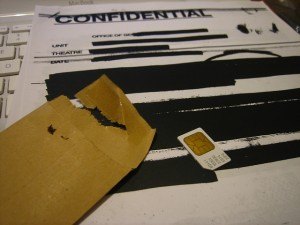
Scarier, is that computers and files containing confidential information, in this case mental health records are 1) being “thrown out” at all and 2) if they are “water-damaged”, which doesn’t fly with me, aren’t being disposed of securely.

“The items she was most concerned about included files and computer hard drives containing personal information. Securities House, a seven-level building in Gloucester St near Latimer Square, was demolished by March Construction and Shilton and Brown in May. It housed at least nine mental health agencies.
Tenants, tipped off about the demolition, managed to stop a truck leaving the site in the rain and divert it to an empty section where the contents were tipped.
Tenants then spent the next two days retrieving files from the rubbish. The files had been in locked metal cabinets which had been emptied.
Office manager Mark Petrie said he had contacted a project manager at the time of the demolition to be told no chance existed for any records or personal effects to be salvaged.
He was told all records were water-damaged and filing cabinets rusted.
A former Shilton and Brown worker who worked on the Securities House demolition told The Press workers were told to throw files, many of which appeared to him to be in good order, in the rubbish.”
Where have some files gone? Who knows.
“Canterbury Muscular Dystrophy Association office manager Eris Le Compte, whose office was on the first floor of Community House, said she had gone to look for the 230 personal medical files she had in her office.”
Hopefully other businesses are doing better, because it’s not just a couple of buildings in the red zone that are housing sensitive information.
CERA feigns ignorance. Clearly some demolition contractors have no idea what they’re doing (or every idea of what they’re doing). If CERA has no knowledge of specific cases of important belongings going missing inside the red zone they’re obviously not doing a very good job.
“A CERA spokeswoman said CERA regularly and actively engaged with contractors who had a clear understanding of their obligations within contracts and the law.
‘We have no knowledge of the specific cases you refer to and we can’t comment on whether any allegations of loss of goods within the CBD Red Zone are attributed to contractors’ staff or some other person,’ the spokeswoman said.”
What’s been going on inside the red zone raises a number of issues businesses need to be planning for. After an event like the Canterbury Earthquake, how effective will locks, safes, and filing cabinets be at protecting valuable and confidential information through demolition and when 930+ people are left roaming in and around your building for a significant period of time?
Image credit: Jeremy Keith
TEDxEQChCh Salon #1
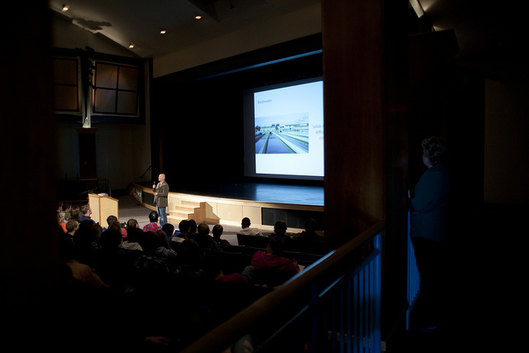
Posted in Life, New Zealand, Worldwide on August 8th, 2011 by Matt Taylor – Be the first to commentA week ago, Christchurchians braved the aftermath of the snow and met at the Bush Bar for the first TEDxEQChCh Salon*. Previous TED talks were shown, and people were invited to share what they were involved in post-quake, or something else the audience would be interested in. Someone I talked to summed up the difference between May’s TEDxEQChCh well: this was more about the people than the buildings.

Kunst Buzz‘s tweet cathedral, the ChristChurch Cathedral made of a random selection of almost 1000 #eqnz tweets (approximately 98,000 characters) which was on display in the TEDxEQChCh lobby, among other TEDxEQChCh memorabilia that has been given to Te Papa.
The talks
Brene Brown: The power of vulnerability
Brene Brown hacks into lives for a living. She talks about banana nut muffins, worthiness, being imperfect, her office supply addiction and human connection, which led her on a quest that sent her to therapy, but changed the way she lived.
Something she said seemed very relevant post-quake: “they had the compassion to be kind to themselves first and then to others.” Very similar to advice given in a pamphlet dropped in our letterbox yesterday.
Tony Robbins asks why we do what we do
Tony Robbins usually runs 50+ hour coaching seminars over weekends. He talks about patterns, resources, needs and describes what happened in one of his seminars of 2000 people from 45 different countries in Hawaii on the day of 9/11.
Mark Bezos: A life lesson from a volunteer firefighter
Mark Bezos usually fights poverty, but also volunteers as a firefighter. He talks about his first fire, and that we shouldn’t wait for something to happen before we try to make a difference.
Dave Meslin: The antidote to apathy
Dave Meslin tries to make local issues engaging. He talks about barriers that keep people from getting involved.
The people
Tim Taylor
Tim Taylor talked about Project Regenerate a subsection on the Rebuild Christchurch site which shares visions for a future Christchurch in video form and lets people vote and comment on them.
Trent Hiles
Trent Hiles talked about the creation of a multi-purpose arts complex in Lyttelton and Lyttelton’s Act of Art, a Gap Filler project whose first installation, a tribute to James K Baxter and the town, is up.
Grace Duyndam
Grace Duyndam talked about the 350.org Moving Planet September 24th worldwide rally against fossil fuels.
* TEDx Salon’s are intended to engage the community between larger events through small recurring events, keeping the spirit of TED alive—ideas worth spreading.
Calendar Girls Cheerleaders
Posted in New Zealand on August 3rd, 2011 by Matt Taylor – Be the first to commentLast Saturday, Canada played the USA in an ice hockey match in Christchurch. Calendar Girls, a strip club, sponsored the event. They also paid $500 to All Star Cheerleaders to have them perform at the event, a team made up of mainly underage girls, including a nine-year-old (disclaimer: I know someone on the team.)
Announcements
‘“They were announced as All Star Cheerleaders brought to you by Calendar Girls,” [Jacqui Le Prou, Calendar Girls owner] said.’
I’ve been told that the team was referred to as the “Calendar Girls Cheerleaders” throughout the night. Online comments from those attending on the night support this too:
“We were at the Ice Hockey – and did think it was rather strange to be introducing the obviously young girls as ‘calendar girls’ – it was never mentioned that they were from a cheer leading club (although it was obvious they were trained in cheerleading) It wasnt just once they said it either – all night!!! If that was my daughter – i’d be FUMING.”—MT
“Did find it a little strange to have the young girls announced as Calender Girls Cheerleaders.”—Michael
I’ve also been told that someone, I’m assuming from Calendar Girls, got a caption for a photo changed from the All Stars Cheerleaders to Calendar Girls Cheerleaders, that someone at The Press picked up on that caption for a photo of obviously young girls and that’s why a reporter started investigating.
Whoops
Above, Jacqui implies that the girls weren’t referred to as “Calendar Girls Cheerleaders”. However Calendar Girls’ social networking pages tell a different story.

Even more concerning is a photo of the Christchurch cheerleading team, including the nine-year-old girl, and I’m told Jacqui Le Prou’s young daughter, that was posted on Calendar Girls’ Auckland Facebook page. Faces blurred by me because they and their parents didn’t know where this photo was going to end up.

Parents
“They don’t sign up for other people to pass them off as Calendar Girls, but then again their parents were all there and they didn’t pull them from their performance.”—The team’s coach, Claire Stackhouse.
The frustration is understandable. I’d say the reason why teams do events like this is to show that they actually have to put in work to pull off a performance, and to raise the profile of cheerleading to be more like a sport and less like something seedy. A comment on the Yahoo article hits the nail on the head on why the girls don’t have horrible parents:
“…cheerleading here bears little resemblance to the US or rugby style cheerleaders. Here it has morphed into something quite different, involving agility, skills, strength…”—Judy
I understand there was a second part to Claire’s quote that wasn’t included in the article (probably due to space constraints, understandable): during a performance that is supposed to be professional, it is very unprofessional to walk out half way through.
Auckland event
The same match was also played in Auckland and an All Star Cheerleading team performed there also.
“[Jacqui] Le Prou said the cheerleaders at the Auckland event were between 18 and 24.”
I’ve been told there were cheerleaders as young as 14 12 on the Auckland team. This also prompts the question: if Calendar Girls is really against using underage girls to promote their club (“she sent me a nine-year-old, which I wasn’t very happy about”) why did they not pull the Christchurch performance when they became aware that there were people on the team under 18, including a nine-year-old?
Why cheerleaders?
People familiar with cheerleading have said that cheerleading teams always have members of varying ages and that it would be near impossible to find a cheerleading team that only has people aged 18 and over in it. I question why Calendar Girls didn’t hire 18+ models, promo girls or use some of their own staff if they wanted to promote their club.
Whether someone involved was aware of what Calendar Girls wanted to introduce the team as or not still leaves the question as to why the team was referred to as the Calendar Girls Cheerleaders when the team was clearly made up of underage girls.
Image credit: Eustaquio Santimano
The National Interest of Foreign Espionage
Posted in New Zealand, Technology, Worldwide on July 25th, 2011 by Matt Taylor – Be the first to commentA van was crushed by rubble following the February Canterbury earthquake, containing Israeli tourists. One of them, Ofer Benyamin Mizrahi, was killed instantly. Michal Friedman, Liron Sadeh and Guy Yurdan escaped. It’s been revealed that Israeli involvement after the quake has been investigated by the SIS and the police.
Fact checking
What appears to be the original Southland Times article that broke the investigation seems to have been poorly fact checked and shows a lack of editorial oversight. Shemi Tzur, Israeli’s ambassador in the South Pacific is said to have flown from Australia, where he is based, except a quick Google search shows that he is actually based in Wellington.
The same article talks about a piece of suspected Russian malware named “agent.btz” and says that “attempts to remove the malware have so far been unsuccessful”, which gives the impression that the computers of the United States Military are still infected. The next part of the sentence states that “new, more potent variations of agent.btz are still appearing”, so what is probably meant is that attempts to eliminate the malware out of existence have been unsuccessful, which isn’t surprising considering the nature of malware and software in general.
Red flags
9000 passports!
The Southland Times article says that Ofer Mizrahi “was reportedly found to be carrying at least five passports.” John Key said “according to his information, Mizrahi was found with only one passport”, of European origin.
The group of three that left Christchurch gave Israeli representatives his Israeli passport. So that makes at least two passports.
Shemi Tzur says that he was handed Ofer’s effects and they contained “more than one passport.” Does that makes at least three passports or does this include the Israeli passport handed off at the airport?
He says it’s common for Israelis to have dual citizenship because Israeli passports aren’t welcome in some countries, which is understandable. However that doesn’t explain why Ofer was traveling with both/multiple passports—I am an expert thanks to watching Border Security on TV and conclude that less eyebrows would be raised at an airport if, when searched, someone wasn’t in the possession of more than one passport.
12 hours
Within 12 hours of the quake the three remaining Israelis had evacuated Christchurch, driven to the airport by Shemi Tzur himself.
This raised eyebrows because they left Ofer behind in the van, but in their defense there was nothing they could have done and it wasn’t like they were leaving someone injured behind. Guy Yurdan, one of the three, said that Ofer was killed instantly.
The advice from many countries to citizens in Christchurch would have been to get out of there as soon as possible. The potential lack of accommodation, food, and water, plus the risk of further aftershocks would have supported their decision to leave as quickly as possible.
A mysterious seventh Israeli
Concerns were raised about a “mysterious seventh Israeli” who was in New Zealand illegally and was reported missing after the earthquake, but weeks later was reported to have left the country. Not sure whether there was anything suspicious about the person apart from their visa situation.
Five Facebook likes
A Facebook tribute page for Ofer came to the attention of investigators because it only had five likes over four months (now 32). Apparently many Israelis don’t have social network accounts. Perhaps those on Facebook who knew Ofer didn’t know of the page? It seems a stretch to say that this is suspicious.
Four phone calls
It’s been reported that Israel Prime Minister Binyamin Netanyahu phoned John Key four times on the day of the earthquake. John Key says that they only actually spoke once in “those first days.” It seems reasonable that a Prime Minister is hard to get hold of, especially during a state of emergency. I’m not sure what the significance of prime ministers calling each other is, I assume representatives from many countries spoke to John Key as a result of the earthquake.
Two search and rescue teams
There was reportedly one Israeli search and rescue team but then there were two? Either way it seems at least one either wasn’t allowed access to the red zone or was removed from the red zone by armed personnel. According to Shemi Tzur, a team was sent by the parents of Ofer Levy (other Ofer?) and Gabi Ingel, two Israelis who died in the earthquake.
The article says “Israeli families reacted that way when their children needed help anywhere in the world, often because it was demanded by insurance companies.” Insurance companies often demand that families hire and fly to a foreign country private search and rescue teams when search and rescue is already underway by the country?
Strange.
Perhaps stranger is Hilik Magnus, who runs the search and rescue company in question, Magnus International Search & Rescue:
“He served in the Israel Defence Forces in an elite paratrooper battalion specializing in special operations. He fought in the Attrition War, first lebanon war and the Yom Kippur War, remained a reserve officer for twenty years and served also in the intelligence community.”
Stranger?
Their team entered the red zone “accompanied by police, only to retrieve the personal effects of two people who died.” “There was only one rescue team and it was allowed inside the red zone to accompany police to retrieve backpacks belonging to Mr Levy and Mr Ingel.”
One Israel Civil Defense Chief
The Southland Times article says “In the hours after the 6.3 quake struck: Israel’s civil defence chief left Israel for Christchurch.” The New Zealand Herald reports that Matan Vilnai did visit Christchurch, but nine days later. And not from Israel, but from Australia where he was for a visit.
This doesn’t seem suspicious.
A groups of forensic analysts
An Israeli forensic analysis team sent by the Israeli government worked on victim identification in the morgue. A security audit of the national police computer database was ordered after someone connected that the analysts could have accessed it. The police say that their system is secure. Someone from the SIS says that it could be compromised with a USB drive:
“An SIS officer said it would take only moments for a USB drive to be inserted in a police computer terminal and for a program allowing remote backdoor access to be loaded.”—Stuff
It’s questionable why USB access would even be enabled on computers that have access to such confidential material.
Why New Zealand?
Intelligence
Gordon Thomas, who has written about Mossad says that Mossad trainees, possibly picked during compulsory military service, were usually planted overseas in groups of four. He says that the CIA and MI6 have offices in Auckland and have “held high-level meetings with New Zealand spy bosses”. They want to know what sparked the SIS investigation, what investigations were carried out and what passports the group possessed. He thinks New Zealand is a credible Mossad target because al Qaeda cells could expand into the Pacific Rim. Israel would want to know what our intelligence agencies know, what they are sharing and how good they are at getting information.
He says that Mossad has a reputation for using students as agents and that using two couples is “standard Mossad operation style. The reason they have a man and a woman … it’s easy to pass unnoticed, unchallenged, and the woman acts as back-up.”
Passports
New Zealand passports are readily accepted around the world. Anyone gaining one who had nefarious purposes would likely face no contest at a border. Paul Buchanan, who has worked at the Pentagon says that it’s unlikely the four were Mossad agents because of their age and the apparent low-level task of passport fraud they were undertaking, but they might have been recruits operating as sayanins, the Hebrew word for helper. He says that after the September earthquake, Christchurch may have been seen as a good target to get names of New Zealanders to use for false passports.
The three survivors from the van gave an interview to Haaretz, an Israeli newspaper, days after the earthquake. It would seem unlike spies to put themselves out in the public eye like that, but maybe that’s reverse psychology. Who knows.
Image credits: Ian Rutherford, Ludovic Bertron, J Aaron Farr, Tom Raftery
“So how do you feel about your light bulbs being stolen?”
Posted in Free Speech, Law, New Zealand on July 12th, 2011 by Matt Taylor – 3 CommentsArie Smith-Voorkamp was the face of Christchurch earthquake looting because of the media attention he received. He made it onto at least one of the <insert bad thing here> the looters!12@@#%^## Facebook groups. Shame on the looters! There is no excuse. Who are they to pick on the poor people of Christchurch?
The loot
The story gets interesting when you find out what he is alleged to have stolen. Two light bulbs from an untenanted and vacant building. Police describe the nature of the offending as serious and say that there is a strong public interest in the case. Arie was in jail for 11 days.
Asperger’s
Arie has Asperger’s syndrome which fuels his obsession for all things electrical, including old light fittings. “Sometimes I get that excited about it sometimes I can’t sleep.” He had walked past the building many times, and became fixated on a switch in the shop. Once inside he found that the switch was too modern, but found two light bulbs that he thought he could clean up and display in his house. He says he was not thinking about theft, or the danger he was placing himself in.
Sunday programme
The Sunday programme ran a story about Arie last week, which seemed to excite the Police. Canterbury Central Police Area Commander Inspector Derek Erasmus suggested to the building owners they call TVNZ to try to stop the story going to air.
“On Friday the Sunday programme received an email from Inspector Erasmus advising us that we were under criminal investigation in relation to our story. So we’ll keep you updated on that.”
The victims
Building owners Andrew and Irene Matsis didn’t even know about the “theft” until Sunday contacted them for the story. This seems to contradict the Police calling the offending serious. Surely in serious offending the victims would actually be notified.
“Well since Sunday interviewed the Matsis’ a fortnight ago, senior Police have visited the couple twice. The first time Thursday and again Friday. On Thursday in a press release Inspector Derek Erasmus, said the Matsis’ were now happy for the case to proceed to court, where the matter should be resolved. Sunday spoke to Andrew Matsis just hours ago, he’s happy for the case to go to court but hopes Arie’s name will be cleared.”
On the programme, Andrew says if he knew about the alleged looting he would’ve been angry at Arie for putting himself in danger, not for pinching anything.
Andrew and Irene say they would not have pressed charges if they were contacted by the Police. The interview resulted in the hilarious question: “So… how do you feel about your lightbulbs being stolen?” to which Irene replied: “We do not care about our lightbulbs, he’s welcome to them. And you can tell the Police, I mean we have more important things [to deal with, our] house is falling down and we’re going to worry about light bulbs? No.”
I know stealing is stealing (though is it in this case if the building owners say he is welcome to the light bulbs, abeit after the fact?), but common sense dictates there is a better use of court time and money than to make an example out of someone who offended as a result of a documented disability, who has an unblemished criminal record, and who has already served jail time just because he took a couple of lighting fixtures.
Andrew Matsis: You said you never had any other history of doing anything like that before?
Arie Smith-Voorkamp: No.
AM: First time with the Police?
ASV: Yes.
AM: And they make a court case. What a waste of money.
What do you think? Is there no excuse for looting, no matter the situation?
Image credit: Me
A Bad Flyer: NZ TV Is Going Digital… Sometime
Posted in New Zealand on July 11th, 2011 by Matt Taylor – 2 Comments
New Zealand’s analog television is being turned off from 2012 so an advertising campaign has been set up to encourage people to switch over to digital. We were sent the following flyer in the mail (click for a bigger version), with good intentions, but it is perhaps quite unhelpful.
When?
It does not contain any mention of when the switch is happening. The statement “You need to go digital to keep watching TV” makes it sound like that could be very soon. But for us in Christchurch and most of the South Island it is happening in 2013, quite a while away. It would have been helpful to include a map from one of Going Digital‘s other leaflets, which shows when each area is switching.

Options?
The options table could be helpful, but contains little information that consumers care about—what is the cost of options, upfront and ongoing, and what is the difference between them? Eg. installation cost and quality of cable versus satellite versus UHF, what options let me rent box office movies and have extra channels available, are there options within options—of HD (what is HD?) and being able to record/play with live TV?
The text that is different on each of the Freeview logos (HD and satellite) is tiny.
Terminology between advertising materials differs. Freeview set-top box is used instead of satellite digital receiver, SKY decoder changes to SKY set-top box, and Freeview set-top box gets the fancy name of HD digital receiver when used in the context of Freeview HD.
Where?
The above map could also be used to show where the different services are available—86% of New Zealand is a frustratingly vague “where” (the 86% of New Zealand that can get Freeview HD includes: Auckland, Waikato, Tauranga, Hawke’s Bay, Manawatu, Wellington, Christchurch and Dunedin. It is going to be, or has been, expanded over 2011 into Invercargill, Timaru, Nelson, Wairarapa, Whanganui, Gisborne, New Plymouth, Taupo, Rotorua and Whangarei.)
The flyer looks good, but needs more detail to be more useful than just a reminder of something that people should get around to doing.
Have you, or do you know someone who has recently switched to digital or has yet to make the switch? How helpful has the advertising material been?
Go Zone
Posted in New Zealand on July 7th, 2011 by Matt Taylor – 1 Comment
We’re in the Green Zone. Here’s the letter we got from CERA (Canterbury Earthquake Recovery Authority) today.
Image credit: Daniel Ansel Tingcungco